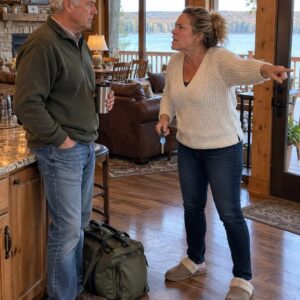
The unraveling, when it came, was quiet. No screaming, no dramatic ultimatums—just the slow collapse of a story Craig had written for us without our consent. When I asked my mother what she actually wanted, she couldn’t say the word no, but fear did it for her. Fear of my father’s sleep being broken, of his routine being shattered, of the sanctuary we’d built turning into someone else’s emergency shelter. Vanessa watched Craig carry boxes back to the truck, her face caught between humiliation and dawning clarity. When she finally admitted there was a friend in the city who’d offered a spare room months ago, the real shape of her choices appeared: she hadn’t been out of options, only out of the ones Craig preferred.
Later, after the truck’s taillights vanished through the trees, the cabin felt like it exhaled. My father sat by the window, his shoulders loose, watching the water with the kind of stillness that isn’t stiffness but ease. My mother slid her hand into mine on the porch and told me he’d sent that text before anyone had agreed to anything, before kindness could be weaponized into consent. “He trusts you,” she said, and it landed heavier than any accusation Craig had thrown. Inside, the trust documents stayed where they’d always been: silent, unromantic, unyielding. The cabin held its purpose; the words held their line. In the end, that was the truth of it—love built the place, but language kept it from being taken.