The story Cynthia finally told me in that locked psychiatric ward did not excuse what she had done, but it made monstrosity impossible. Lewis’s hidden cancer, his terror of infertility, the sperm bank he never mentioned, the letter he’d left at the clinic for a child he wasn’t sure would ever exist—all of it formed a second life running parallel to the one I thought I knew. Cynthia’s grief, her secret decision to use what he’d stored, the surrogate named Renata who carried their child, and the months of sleeplessness and spiraling thoughts that followed the birth—all of it funneled into a single, catastrophic point at Meridian Lake. Postpartum psychosis, the doctors said, a mind turned against itself so violently that killing her own baby had seemed, to her, like an act of protection. I hated her for that. I pitied her for that. I sat with both truths until they stopped fighting and simply coexisted, the way grief and love had already learned to do inside me.
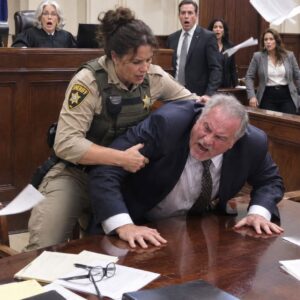
What followed wasn’t redemption so much as relentless, ordinary work. Courtrooms, psychiatric evaluations, a diversion program that treated Cynthia not as a villain to be caged but as a dangerously unwell woman who might yet be made safe. I took temporary custody of the baby I named Evangeline, after the name Lewis and Cynthia had once whispered about in easier years. I read Lewis’s clinic letter at my kitchen table, his apology for keeping his diagnosis from me and his plea—written to some unknown future—for us not to carry our burdens alone. Those words became a map. I chose, against every instinct to retreat, to keep showing up: at Cynthia’s hearings, at her treatment reviews, at supervised visits where she held Evangeline with a trembling care that never once wavered. Trust didn’t return in a rush; it arrived in grains, like sand shaken loose from a fist. Three years later, I watched my granddaughter stand on a step stool in Cynthia’s flour-dusted kitchen, proudly offering me a star-shaped cookie that looked more like a potato, and I finally understood that we had not erased that terrible afternoon, but we had refused to let it define the rest of our lives.