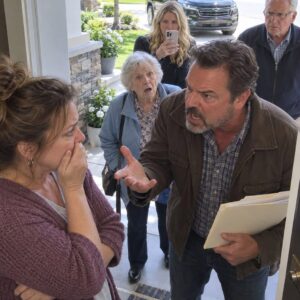
The deputies called it trespassing. My mother called it betrayal. My sister called it cruelty. I called it the first day my answer counted. After the squad cars left and the truck retreated down the mountain, the real fight shifted into quieter weapons: group texts laced with accusation, relatives phoning to “hear my side” and then repeating hers, a family narrative edited to remove trucks, locks, and my very explicit refusal. I responded once, on paper—dates, screenshots, the security‑camera still of the moving truck in my driveway, and her own text: Have the door unlocked. Then I hired an attorney and turned my boundary into something that carried a letterhead. No right of entry. No implied “family share.” No more invisible strings tied to old checks and childhood debts. A gift does not create ownership, the letter said—over money, over houses, over me.
Spring thinned the snow on the slopes as my family rearranged itself at a distance. Lydia took a smaller apartment. My father mailed back the secret keys my mother had quietly copied years ago. My mother stayed silent until the day she appeared at my new gate, forced to press a call button like any stranger. Her apology was narrow—“I shouldn’t have said it was family property”—but it was the first time she admitted there had been a plan at all, not a misunderstanding. She had trusted my guilt more than my rights. I listened, then told her she could talk from the road; no, she could not come inside. That night, with fresh snow softening the scars in the gravel where the truck had stood, my father texted that he was proud of me. I believed him, but I did not unlock anything for it. Because the mountain had taught me this: a boundary is not a wall against love; it is a door with a lock, and I decide who gets a key. Outside, the ridge held its silence. Inside, for the first time, so did I.