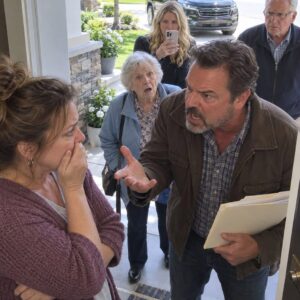
The real confrontation didn’t happen in that driveway. It unfolded in quieter rooms, over slower weeks. My mother finally called on a Sunday, no audience this time, and said the sentence I’d needed most: “I asked forty three people to help me keep a secret from you.” She named it herself—no excuses, no emojis—then admitted she’d become the same woman she’d once resented, treating her child’s work as communal property because it was easier than facing her own envy and entitlement. My father followed later, apology dragged out like a bad tooth, but real: he’d been more ashamed of being locked out than of having walked in, uninvited, for years. “We took advantage of how much you love us,” he said. “We thought that meant you’d never lock a door.”
Some relationships stayed hairline-cracked. Keaton’s apology arrived thin and late, and I stopped trying to thicken it for him. But the next time there was a “family weekend,” it was four people, not twenty, invited by me, on dates I chose, with a code I generated and deleted myself. My mother brought flowers for the guest room without being asked. My father spent an afternoon quietly fixing loose boards on the dock, saying nothing about that ruined Friday, his hands making the apology his mouth still struggled to hold. We didn’t pretend nothing had happened; we walked around the outline of it, careful not to step back into the old shape.
Now, when I come off a night shift with antiseptic in my hair, the lake house is exactly what I bought it to be: a place no one enters without my yes. The hidden key I once left under a fake rock sits in a dish on my dresser, a small metal warning against ever confusing access with love again. Families like to believe unlocked doors prove devotion; I learned the opposite. The people who truly love you are the ones who will stand on your porch, read the word “No,” and wait—patiently, respectfully—until you decide, on your own terms, to open the door and let them in.