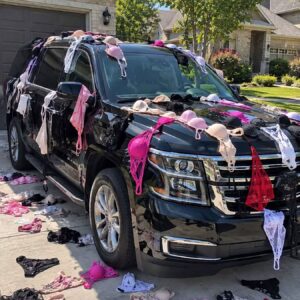
Investigations spread from that driveway like cracks through a slab. Greg’s “favor” job with the truck exposed years of quiet theft—company equipment used off-book, permits skipped, threats to anyone who pushed back. Licensing boards took notice. So did the tax people. Their lawyers tried to wrap it all in soft words—misunderstanding, neighbor dispute, unfortunate overreaction—but the footage cut every excuse off at the knees. On the screen, there was no charm, no context, just a man weaponizing his business and a woman savoring the damage. Restitution was ordered, far beyond the value of my old Chevrolet. Greg’s license was suspended. Their savings bled out into legal fees. The balcony that had once looked down on us became a stage for hushed arguments and realtors’ quiet tours.
Eighteen months later, their “forever home” had a For Sale sign and then new owners who waved instead of sneered. I kept my father’s house. I rebuilt the porch, narrowed the driveway, planted a garden where the concrete had hardened and been torn out. Olivia still checks the cameras sometimes, not fearfully, but with the casual familiarity of someone who understands that the record is power. I used to think my inheritance was land: peeling paint, sagging beams, a strip of gravel by a lake. I know better now. What my father really left us was the instinct to document, to refuse to let the powerful rewrite what they’ve done. An old man installed cameras. An eight-year-old printed a single picture. A woman in a cashmere robe learned, too late, that when the truth is captured, it doesn’t need you to fight for it. It just needs you not to look away.