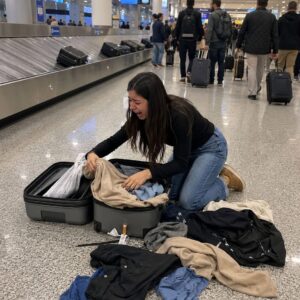
When I turned the key and pulled Eleanor’s heavy door inward, the look on Brandon’s face was almost worse than the betrayal itself; he wasn’t shocked I’d survived—he was shocked I’d won. My mother hovered at his shoulder, mascara already smudging as if she’d rehearsed this scene in a mirror, ready to cry on cue. I didn’t invite them in. I stepped onto the threshold, my children visible behind me in the hallway, and laid out each piece of the story like evidence on a table: the timestamped boarding passes, the video of him walking away, the email where he called the house “easy money,” my mother’s message telling me to “stop making drama” while my kids slept on airport chairs. With every word, I watched his version of events shrink, until even he seemed too small to fit inside it.
In the months that followed, courtrooms replaced kitchen tables as the place our family history was dissected. The judgment came down in language so clear even my mother couldn’t twist it: the house was mine, the fraud was his, the consequences—financial and legal—would follow him, not me. But there was no verdict that could force love where it had never truly lived. When my parents chose to “stay neutral,” it felt like a second abandonment, quieter but just as sharp. So I built something else in Eleanor’s house: a life that didn’t depend on their approval. Mornings began with coffee in the sunroom where she once read to me, my kids’ drawings taped over old water stains. When Lily asked, “Will Uncle Brandon ever say sorry?” I told her the truth: maybe not. Then I showed her the folder where I keep our passports, the deed, and copies of every important paper—proof that we exist, that we belong, and that no one will ever erase us again.