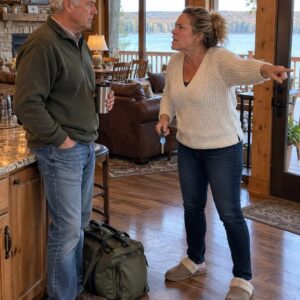
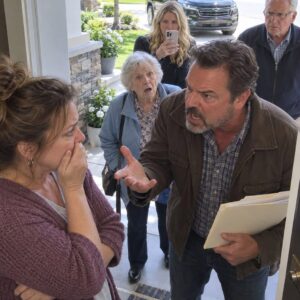
By the time I drove up two days later, the gravel had forgotten their tires. The gate recognized my code without hesitation, the motor whirring open like an answer I no longer had to beg for. Inside, the envelope on the counter felt heavier than paper had any right to be. The camera log showed their arrival, their arguments, their eventual retreat, time-stamped proof that the world did not end when I refused to be annexed. Dale’s note—Your place is secure—sat on top like a benediction, a simple sentence that named what my family had always treated as betrayal: choosing a life that wasn’t built around their next emergency.
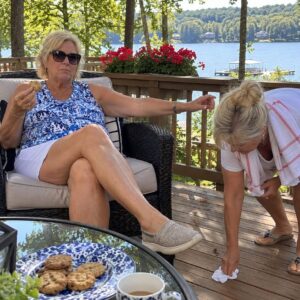
The backlash tried to drag me back into orbit. My mother’s voicemails braided shame with nostalgia, replaying my grandmother’s voice as if the dead could co-sign her entitlement. My father toggled between silence and fury, demanding to know how I could “do this” after “everything we’ve been through,” as if history were a bill I’d forgotten to pay. Melissa’s message was the sharpest: “Hope the house is worth losing your family.” But standing on the porch, watching the lake hold the sky without effort, I finally saw the math clearly. They had never asked for help; they had assumed possession. My earnings were “our” cushion, my spare room “our” solution, my boundaries “our” problem. The house hadn’t cost me a family; it had illuminated the lease they’d written in invisible ink, the one that named me landlord, provider, and perpetual understudy in my own life. Canceling it didn’t make me heartless. It made me free. And in that quiet, where no one was demanding a key, I understood that the most radical act of love I could offer—to them and to myself—was to refuse to let their hunger live here anymore.