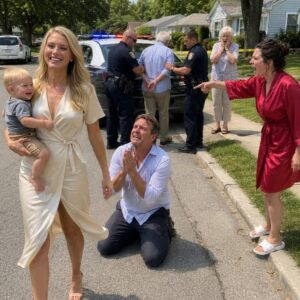
When the investigators stepped through the door, my father finally looked small. The badge he’d once worn could not shield him from the word kidnapping, from the evidence boxes filled with my drawings and the yellow blanket that had wrapped a stranger’s baby before it wrapped me. Outside, red and blue lights washed the maple trees he’d planted for “his girl,” and I sat in the back of a patrol car with a blanket around my shoulders, understanding that I was both victim and daughter, loved child and missing person returned. The next morning, my grandfather opened his door, said “Natalie?” in a voice that fractured, and held me like something he had been bracing to never touch again.
In the months that followed, courtrooms and headlines tried to flatten what had happened into questions of guilt and leniency. But nothing about it was simple. I listened as my mother’s letter confessed that being my parent was both her salvation and my theft. I stood at sentencing and said both of my names out loud, refusing to let the law choose one for me. I moved closer to the man who had waited twenty-one years for a granddaughter he thought was buried, and I learned my birth parents in stories and photographs instead of memories. I still wake some nights unsure which name belongs in my mouth, still miss the people who wronged me, still carry a grief that has no single direction. Yet at the highway memorial, with yellow roses in my hand and my grandfather’s palm warm on my shoulder, I understood this much: truth does not return what was taken, but it gives you something solid to build on. So I built a name that could hold all of it—Natalie for the life stolen, Claire for the life lived—and I am learning, day by day, to be wholly, fiercely both.