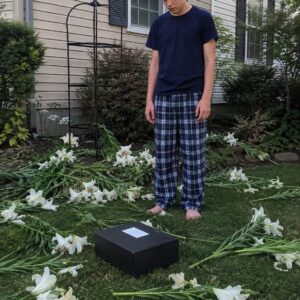
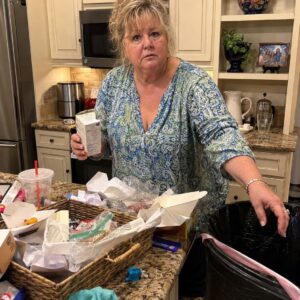
The box I sent her looked harmless: soft gray cardboard, a ribbon tied neatly, my handwriting on the label. Inside was everything she had refused to see. My letter came first, four pages of calm description—no insults, no raised voice, only facts. Here is what the garden was, I wrote. Here is what it meant to the woman who planted it in 1982 and tended it until her hands shook. Here is what you did to it in one afternoon. Then the photographs: before and after, paired like accusations that never needed to use the word. The climbing rose in full bloom, then the raw gaps in the fence line. The pillows on the couch, then the same pillows, stained and ground with dirt. The kitchen as it had been, the kitchen as I found it.
Beneath the photos lay copies of my grandmother’s journal entries from her last summer at the lake. Her notes about the roses on the south fence, the morning she made me blueberry pancakes, the line where she wrote that she hoped whoever inherited the house would “see it.” And finally, pressed into a small envelope, a single dried rose from that same fence. When Kelsey called, her voice was ragged. “You can’t make me feel this way,” she said, but the journal already had. She apologized without excuses, asked for the invoices, and—more quietly—asked if she could see the garden when it was reborn. In the spring, Thomas and I knelt in the soil together, placing new roots where old ones had been torn. It would take three seasons for the climbing rose to return, but time was part of the work. I wasn’t rebuilding a crime scene; I was continuing a sentence my grandmother had started, in the same careful handwriting, with different hands. When Kelsey finally came, she stood at the fence and touched one of the new blooms as if it might break. “I don’t want to be the person who did this,” she whispered. “Then don’t be,” I said. The garden wasn’t what it had been, and never would be. It was proof of something else: that damage can be named, that care can be taught, and that love, planted deep enough, can survive even being ripped out once.