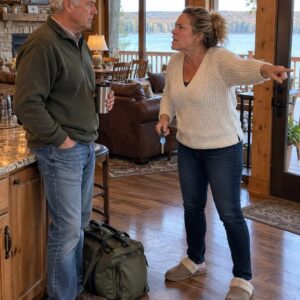
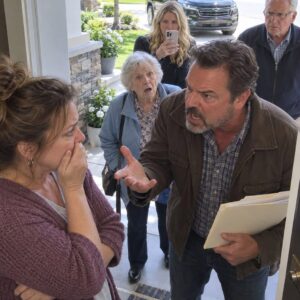
We carried the suitcases and the shattered story inside, setting both down harder than we meant to. I boiled water because it gave my hands something to do while my life rearranged itself. At the table, Diane heard, in three clipped sentences, how her son had let her believe he’d “provided” this house, how every holiday compliment about “his” good taste had landed on me and slid off, unclaimed. Her apology—“for nine years of erasing what you built”—stung more than her earlier accusations, because it named what I had quietly allowed. Lisa’s phone went dark between us. She admitted she’d driven here on the fuel of entitlement and habit, trusting Mark’s version of reality more than the woman who actually paid the mortgage.
Mark’s confession came out graceless and true: he’d rather disappoint facts than disappoint his mother. That cowardice had been the secret foundation under our marriage. We didn’t fix anything that night; we labeled it. Diane agreed to stay three weeks as my guest, not his benefactor, while she considered Lanexa. In the guest room, peace lily on the sill, she said softly, “I see why you bought this house,” and the pronoun landed like a blessing and a verdict. Later, she admitted she’d once asked why the deed was in my name and Mark had called it “a tax thing.” We both understood how convenient that lie had been for all of us.
By the time I found him in the kitchen, the kettle had cooled and so had his defenses. He didn’t argue when I said the story had to be rewritten—not just on paper, but in every room where he’d let me become invisible. Decisions about the house would start with me or not happen at all. He promised to answer questions honestly, even when the answers shrank him, because now he knew the dodge was what truly made him small. The house remains legally mine; emotionally, it’s under renovation, brick by brick. Diane will move on. The peace lily thrives in the window. The rosebushes, hacked short for years, are being pruned the way she taught me: long, brutal cuts that look like damage until the blooms come back stronger. It is, unintentionally, the clearest description of what we’re doing now—cutting back to the truth so anything healthy has a chance to grow.
So I load the dishwasher, start dinner, and stand in the kitchen of the house I bought alone and chose—deliberately, this time—to share. The facts are finally in their correct order. The story that comes after them, the marriage that may or may not survive their weight, is work we are only beginning. And beginning, I’ve learned, is the one part of the story you have to own without letting anyone else’s name onto the deed.