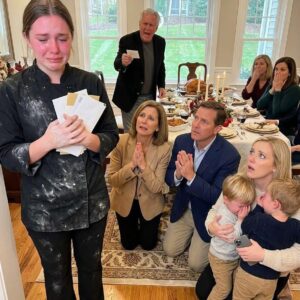
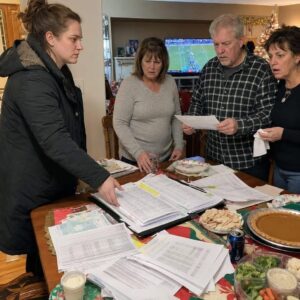
My mother’s first apology wasn’t a word; it was the way her fingers spasmed around her phone, knuckles whitening as she scrolled through her own complicity. “Harper, we didn’t know,” she finally choked, but even she seemed to hear how hollow it sounded when timestamp after timestamp proved they had known enough—and chosen not to act. My father tried to speak, then stopped, his eyes fixed on the printed texts as if they were a mirror he’d spent his whole life avoiding. Brianna, for once, had no script. No “you’re too sensitive,” no “that’s not what I meant.” Just a strangled, “I didn’t think you’d actually…” that died in the air, because we both knew what she hadn’t thought I’d actually do was die.
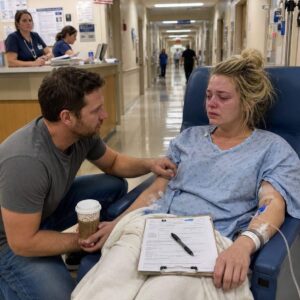
When my mother asked for Madeline, I felt the familiar pull to rescue them from themselves, to offer the baby as a bandage. Instead, I thought of the metal taste of fear in the ambulance, the nurse’s voice asking who to call and my own surprising steadiness as I said, “No family—call Evelyn.” I thought of waking up from surgery to a quiet phone, no missed calls from the people now clutching a gift bag like a ticket they were owed. So I told them the truth: that there was a baby in this apartment, but not a granddaughter in this room. That access to my child was not a consolation prize for surviving their neglect. They left without seeing her, their absence finally matching the reality I’d lived. Later, with Madeline’s breath warm against my collarbone, I cried—not for losing them, but for the girl who’d spent years auditioning for love that was never coming. Then I made a different promise: my daughter would grow up knowing that safety was not negotiable, that love did not require bleeding for someone else’s comfort, and that the family we build on purpose is worth more than any title they once assumed was theirs by right.