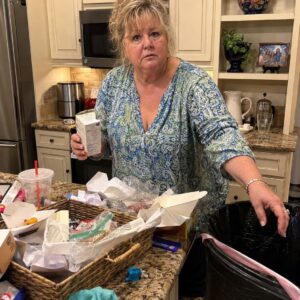
When we finally confronted her, the air in our living room went thin. Diane didn’t deny it; she rationalized. She said we were naïve, too “in love” to see what raising a child with Down syndrome would really mean. She claimed she was “helping us wake up” before we got “too attached,” as if our daughter were a bad investment instead of a person. My husband’s face crumpled in a way I had never seen, his childhood colliding with the monstrous calculation in her voice. Then Ben stepped forward, fists balled, voice small but unwavering: “We already wanted her. So why are you trying to make her go away?” The question landed harder than any accusation. There was no explanation that could make it humane.
The decision that followed felt both brutal and strangely clear. We called the police, documented what Ben had witnessed, and took Brenda to be examined. There would be no more unsupervised visits, no more “second chances” offered at the expense of our children’s safety. My husband grieved the mother he’d lost long before we drew that line; I grieved the illusion that love and blood were always the same thing. But the house began to knit itself back together. Brenda grew on her own timetable, each new word and wobbling step a quiet defiance of the future Diane had scripted for her. Ben returned to his own bed, not as a sentry but as a brother, teaching Brenda dinosaur names and how to blow spit bubbles until they both howled with laughter. On her first birthday, frosting on his sleeves and his sister’s hand tangled in his hair, he announced he’d already gotten his wish. Watching them, I finally understood the only truth that mattered: she was never a burden to be managed, only a child to be loved—and we would choose them, both of them, over anyone who asked us to do anythin.