The grand jury heard Hattie Mae before they ever heard me. They saw the pharmacy log showing her heart medication “confiscated as evidence,” the body cam clip where she begged to keep her pills, the deed she signed in a haze of pain and fear. They saw how her farm slid through two shell companies into a holding entity controlled by Voss’s brother-in-law, neatly aligned with a utility’s proposed transmission corridor. My broken wrist was just the doorway; the real case was a lattice of grief and paper—elderly Black landowners arrested on pretexts, jailed over weekends, and released to find their signatures on documents they barely remembered. Caleb Miller sat at the witness stand, voice cracking as he read from that blue notebook, each line a match held to the sheriff’s lies. The defense tried to paint him as a coward, me as an angry outsider with an axe to grind. But the ledger entries, the bank wires, and the hollowed-out faces in the gallery turned their arguments to dust.
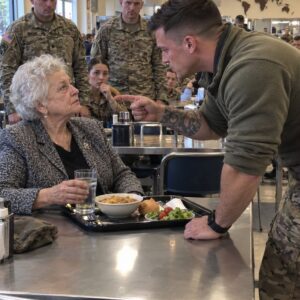
When the verdict came, the room did not cheer. It exhaled. Seventeen years for Voss. Eight for his brother-in-law. Restitution, forfeiture, and—slowly, through civil suits and title actions—six hundred and forty acres walking home to the families who’d thought the law was something that only ever took. I declined the settlement money tied to my assault; instead, we funneled it into a legal clinic we named The Notebook, where church ladies and farmhands now learn what a power of attorney can and cannot do, how to read a deed before signing it, how to say “I’d like a lawyer” without their voices shaking. Sheriff Gloria Tennant—once the only deputy who wouldn’t laugh at Voss’s jokes—was elected on a promise that no arrest in Pell County would ever happen off camera again. Miller transferred to evidence, the blue notebook framed on the wall above his desk, a daily reminder that silence is a choice. I went back to my bench in Atlanta with a healed wrist that aches when it rains and a diner video that plays, without sound, in my chambers when young lawyers think justice is only what happens after the cuffs go on. The badge in my purse could have saved me in five seconds. Waiting cost me blood and bone—but it bought a county its memory back.