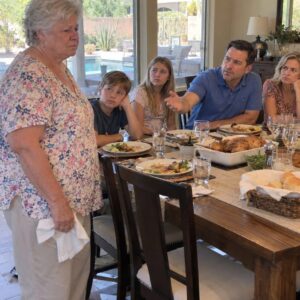
The takedown didn’t start with shouting; it started with paper. At Diane’s table, Sandra laid everything out like an autopsy: the property deed in Diane’s name alone, my mother’s letter, the trust statements, Megan’s printed texts where Ray bragged about “our family land,” and the doctor’s note certifying Diane’s mind was clear. The sheriff’s violation notice for the illegal power line sat on top, a quiet threat with a county seal. I told Ray I didn’t want his money. I wanted the pavilion gone, the shoreline restored, and the truth told to Megan about what really happened on that road.
For once, he ran out of angles. Under Megan’s stare, he admitted driving me out, dropping me at the highway, then telling everyone I’d “taken off.” He choked on the trust theft, but he couldn’t argue with his own signature or the memory of a kid waiting at a gas station window until the clerk locked the doors. Within ten days, the pavilion was dismantled, the yard re‑graded, and an electrician unwired the dangerous tie‑in. The bank forced repayment of the three stolen checks. Megan moved her wedding to a small barn and sent me an invitation addressed to my full name. I sat in the back with Diane, who’d already placed the lake into a trust that listed me as successor, sealing the door Ray thought he could shoulder through forever.
We don’t talk now, and I’ve stopped rehearsing speeches I’ll never give him. This winter, I walked the frozen shoreline alone, my mother’s letter folded in my pocket, the paper gone soft at the crease where she called me “a gentle man” and begged Diane not to let anyone mistake that for weakness. The boy he abandoned on the road didn’t die out there; he kept walking, step after blistered step, until he could stand between Ray and the people he preyed on. In the end, my father lost the land, the lie, and the story. I kept the only thing he ever truly feared I’d claim: my own name, on my own ground.