The closing took twenty minutes; signing my name that many times felt like carving it into wet concrete. I walked out of the bank with the deed to eighty acres of worn‑out ground and just enough cash left that one bad storm could scatter it like chaff. Moving day was one gravel road wide: we carried boxes past the house I was losing into the house nobody wanted, my boots tracing the same ruts Jeff’s had made hauling shingles over to fix the Wiebe roof for “someday.” Abby hung his cap on a new nail without asking; it looked wrong on that wall and exactly right on her.
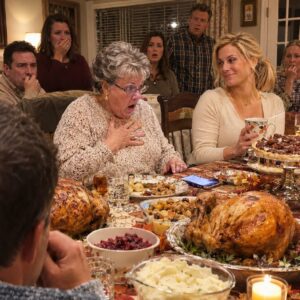
Planting season made the grief loud. Randy’s big tractor thundered past on Jeff’s old fields, the ones my husband had died believing we’d grow into together. I rattled along on my used tractor, hands aching, every skipped row a reminder I was doing this with stubbornness instead of skill. The neighbors watched. So did the bank. But the dust didn’t care who was driving, only that the seed went in. When Luke crossed the road to help, then Scott, then finally Randy with his apology laid bare between mashed potatoes and Sunday silence, I understood the thing the envelope had tried to hide: the farm had never really been the house, or even the acres. It was the choice to stay when leaving would be easier.
That fall, when the Wiebe eighty paid for itself one hard year at a time, I didn’t feel vindicated; I felt rooted. I opened a savings account in Abby’s name with five thousand fragile dollars and wrote “For the Wiebe eighty” in the memo line, my hand shaking at the thought of a future that might actually arrive. The pencil marks from the old pantry trim came with us, nailed up in a new hallway where the floor still creaked wrong under my feet. On her thirteenth birthday, I pressed Jeff’s carpenter’s pencil against fresh paint and wrote, “Abby, 13, Wiebe place,” while she stretched in her socks, his cap finally almost fitting.
Out the window, two farms faced each other across the gravel like a before and after photo: the house I’d been paid to leave and the ground I’d gambled everything to claim. One carried Jeff’s last name on the mailbox; the other carried his refusal to quit. We hadn’t escaped the bank or the weather or the math; we’d simply learned to live inside them without asking permission. I used to think security came in envelopes and signatures. Now I know it comes in rows—straight enough, deep enough, stubborn enough to rise again after being buried. We didn’t inherit our future. We planted it, acre by acre, and watched it come up green where nobody thought anything worth keeping would ever grow.