He finished it for her. “Poor,” he said, like a diagnosis that had already healed. Then, with the patience of a man who measures time in harvests, he peeled apart her motives until fear and contempt lay in separate, unmistakable piles. He named the scam she’d seen on a screen, the shame she’d felt when a supervisor praised her “vigilance,” and the instinct that had made her perform his interrogation in public instead of pulling him gently aside. When Tom offered termination like a gavel, Grandpa shook his head. Mercy, he seemed to believe, was heavier than punishment—and more likely to leave a mark.
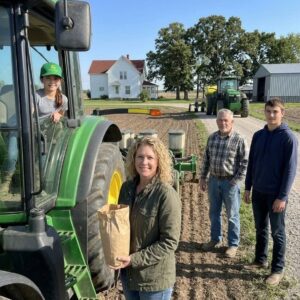
The mark he chose was mud. He made her trace every brown print across the gray carpet on her knees, not as penance to him but as a lesson in origin: each smudge a mortgage, a seed, a risk someone had taken so that lobby could gleam. On the farm, with corn hissing into the hopper and her new boots sinking into ruts his father had carved, she held soil that smelled of iron and rain and diesel, and heard him say, “That’s what a bank is.” Years later, policies and plaques would echo those words, but the real change lived quieter—in Ashlyn’s hand on a junior lender’s shoulder, in the way tellers now greeted muddy boots like signatures, in the dark crumble my grandfather set between two coffee cups. When he called it “the bank,” I understood: the vault, the town, even my grandmother’s empty chair were all just different ways of holding the same fragile, priceless thing—trust, scooped from the ground and passed, carefully, from hand to hand.