In the kitchen, she braced her hands on the counter, staring past the sink at the bare apple trees, shoulders trembling like they were holding up more than the house. When she finally spoke, her voice was so small I almost didn’t recognize it. Frank’s mother had done it first, she said: 1979, her first Thanksgiving here, her first apple pie on this same table. One bite, one wrinkled nose, and the verdict—Leave that for the dog, Eunice—while everyone laughed. She’d never baked again. Instead, she’d bought perfection from Hobbs, wrapped her shame in sugar and reputation, and when I arrived years later with hopeful lattice crusts and foil‑covered glass dishes, all she saw was the girl she used to be, the humiliation she refused to feel twice. So she handed it to me instead. I told her I wouldn’t pretend it was all right. Six years of bathroom tears and duck‑patterned wallpaper weren’t dissolving in one apology.
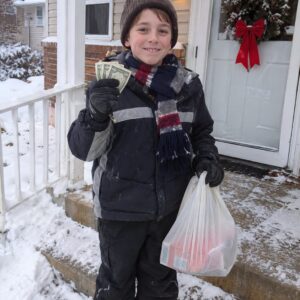
But she still offered it—awkward, halting, real. Sorry for the apple, the pumpkin, the bourbon pecan on top of the fridge, “mostly the dog.” She asked, almost shy, if I’d ever bring a pie again. Not from Hobbs. Mine. For her table. I told her I’d think about it, and for once she accepted that as enough. The next morning she appeared at Hobbs in her church coat to help bake the thirty‑seven pies we’d refused to make on Thanksgiving. She was terrible at crimping, flour on her sleeves, swearing under her breath while my sons giggled, but she stayed. By the twentieth pie, her fingers had learned a new shape. At every doorstep, she stood behind Wilbur and said, with a pride that startled us both, “My daughter‑in‑law made it.”
A year later, I carried my own bourbon pecan into her house—Nana June’s dish, no label, no foil. Eunice set it dead center on Frank’s mother’s polished silver stand. At the far end of the dessert table, nearly falling off, sat an apple pie with a crooked lattice and a weary, overworked crust. Hers. The first real one since 1979. “Leave the amateur stuff for the dog, Polly,” she said, but this time her eyes were soft and everyone heard the joke bending back on itself. She cut my pie, called it “the real thing,” and set the first slice in front of me. I walked to the far end, served myself a collapsing wedge of her apple, and tasted every wrong note—too much cinnamon, the wrong apples, tough edges. It was the best pie I’d had all year. “You tried,” I told her. In full view of the table, she squeezed my hand and said, “Next year, I’ll try again.” And for the first time, I believed that what we were passing around wasn’t just dessert, but a new recipe for doing it differently than the people who hurt us.