Big Mike’s voice settled over us like smoke: “We don’t get to pick who’s worth saving. We just show up when the call comes in.” So I called Linda, laid the phone in Tom’s trembling hand, and stepped back beneath Sean’s photo with Noah. While their voices cracked and clashed across the bay, my son stared up at his father’s grin and asked if Sean would be mad. I thought of every stranger Sean had dragged from flames without first demanding a résumé of sins. “No,” I said. “He’d say this isn’t about Tom deserving it. It’s about Ellie deserving everyone who’s supposed to love her, standing their post.”
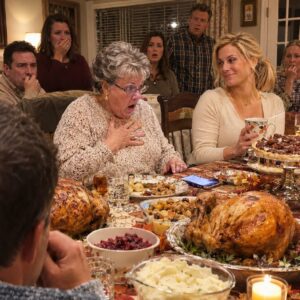
What followed wasn’t redemption so much as rehab: court dates, slammed doors, Ellie’s hoarse “You left,” and Tom’s stubborn, shivering presence on the porch steps, day after frozen day. He learned the slow work of staying—rides to chemo, bad takeout, losing at Uno because those were the rules. By the third Thanksgiving, Station 9 needed four turkeys and extra foil. Ellie’s hair was wild again, my business had grown, and Tom sat nowhere special at the table, passing rolls with red-rimmed eyes. When Noah stood to “do the honors,” his thanks for food and people braided Sean’s ghost to the living room around us. Later, loading thirty-seven firehouse plates into the truck, he asked if I’d still hand him those thirty dollars, knowing everything they’d cost and changed. I pictured the terror, the pink notice, the boy at Brennan’s counter saying, My dad would’ve done it. “Yes,” I told him. “Every time.” Engine 9’s lights painted Tilghman Street in borrowed sunset as we climbed in. Somewhere, another bell was ringing for another child, another family stepping into the long, ordinary road of after. “Come on, buddy,” Sean said in my head, as clear as ever. Somebody was waiting. So we went to find them.