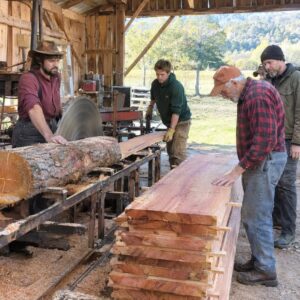
The captain—Marcus Hale—held my hand in the aisle and unfolded the winter my husband had quietly carried alone. At sixteen, thrown out into the snow by a drunk stepfather, Marcus had jimmied the back door of Hickory Ridge’s wood shop and slept under Walt’s workbench. Walt found him, gave him a cot in the supply room, a space heater, his own truck sleeping bag, and two lunches every day in brown paper bags. I’d packed those lunches—ham and Swiss, apple, two oatmeal cookies—thinking my fifty‑one‑year‑old husband had simply grown hungrier. On each napkin he’d written, in that tiny printing I knew by heart, “Eat the apple first. Do your algebra. Stand up straight, sailor.”
Marcus said those lunches, that hidden bed, and Walt’s quiet stubborn faith had steered him into the Navy and then into that cockpit. Over the PA he told the whole plane that he was flying because a shop teacher wouldn’t leave a boy under a bench, and that I had packed the best lunches he ever ate. Then he announced I was returning to 3D. As Denise and a shaking young flight attendant walked me back through a rising wave of applause and salutes—from a soldier, a Vietnam vet, a big man in a Cowboys jersey—the suit in 3C stared at his hands, gray with shame.
In Norfolk, that man, Brian, found me at baggage claim, confessed his father was dying in hospice and that he’d wanted my tears gone because they threatened to break his own. I handed him Walt’s funeral program and an invitation to ham biscuits instead of the punishment he expected. “Go see your father,” I told him. “Don’t finish the deck.” He did; days later he wrote to say he’d held his father’s hand through the end, the presentation mercifully forgotten.
At the viewing in Norfolk, the life Walt had built quietly with calloused hands came to stand beside his casket: gray‑haired “boys” from Hickory Ridge, neighbors with birdhouses still hanging, the man whose wheelchair ramp never sagged, Navy shipmates in faded caps. Marcus arrived in uniform with his foster mother, Mrs. Okonkwo, who told me how Walt had sat in her driveway for two hours in 1997, refusing to come in because “the boy needs a family now, not a shop teacher.” At the cemetery, under a gray October sky and the crack of three rifle volleys, the Navy folded the flag and placed it in my lap with those words about “honorable and faithful service.” I heard another word: steadfast. Six letters. LOYAL—the last answer Walt almost finished.
Marcus served as a pallbearer in his airline blues, then knelt on the grass and admitted he’d never truly told Walt what he’d done. I told him Walt knew; he’d kept every Christmas card signed “Your Assistant” in a shoebox above the table saw while throwing out his own medals. I pressed the folding rule from Walt’s pocket into Marcus’s hand; he slid it into his shirt, beside his pilot’s wings, palm flat over both like a vow.
Back home in Mesa, I climbed onto Walt’s old stool in the hot garage and opened that shoebox. Buried among decades of cards were Marcus’s twenty‑five, each with a little airplane on the front. Inside the first was a yellowed napkin: “Eat the apple first,” in Walt’s tiny print. On the card Marcus had written, “I kept every napkin. All 63. This is the first. I’m going to be a Navy pilot. I eat the apple first every day.”
So I wrote him a Christmas card of my own, inviting him, Mrs. Okonkwo, and Denise to Karen’s table in Virginia Beach. I promised a packed lunch for his flight home: ham and Swiss on rye, an apple, two oatmeal cookies in wax paper. “You know what to eat first,” I wrote, tucking the old napkin inside.
Then I walked my letter to the mailbox, past Walt’s tools and the cactus he called “the world’s ugliest Christmas tree,” and watched a jet climb out of Phoenix, banking east toward water he’d missed for seventeen years. I shaded my eyes the way he used to and stayed there until it was only a silver speck, heading home—carrying, somewhere up front, a man with two rulers in his pocket and a note to always start with the apple.